
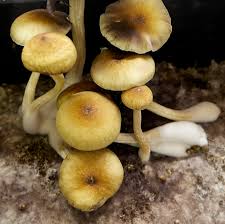
The Rise of Psychedelic Edibles:
This is the psychedelic edibles market in 2024. It is enormous, largely unregulated, deeply confusing to consumers, and sitting at the collision point of three simultaneous cultural forces: a genuine scientific renaissance in psychedelic medicine, a decades-long erosion of trust in pharmaceutical approaches to mental health, and an entrepreneurial ecosystem that has learned — from the cannabis industry, from the supplement industry, from the gray market in synthetic cannabinoids — exactly how to move fast before regulations catch up.
This article is not a condemnation of psychedelic research, which is producing genuinely exciting results in clinical settings. It is an examination of what happens when cultural enthusiasm for that research outpaces the regulatory and public health infrastructure needed to translate it into safe consumer access. The story of psychedelic edibles is ultimately a story about a gap — and about who falls into it.
1. A Brief History of Psychedelic Edibles
The idea of consuming psychedelic compounds through food is not new. Indigenous cultures in Mesoamerica, Africa, and North America have incorporated psychedelic plants and fungi into ceremonial contexts for thousands of years, often through preparations that involved ingestion rather than smoking. The Mazatec tradition of consuming psilocybin mushrooms in veladas — nighttime healing ceremonies — typically involved eating the mushrooms directly or grinding them into a paste. The San people of southern Africa prepared kanna (Sceletium tortuosum) into edible forms. The Amazonian ayahuasca brew is, fundamentally, a psychedelic beverage.
In the Western world, the modern history of psychedelic edibles began with Albert Hofmann’s accidental discovery of LSD in 1943 and the subsequent experiments of the 1950s and 1960s, which explored its potential as a psychiatric tool. During the counterculture period of the 1960s, psilocybin mushrooms — introduced to the Western world through the writings of R. Gordon Wasson and the research of Timothy Leary and Richard Alpert — began to be consumed recreationally, typically by eating the dried fungi directly.
The transformation of psychedelic compounds into consumer edible products — chocolates, gummies, baked goods, beverages — is a product of the 21st century, and specifically of the past decade. It reflects both the influence of the legal cannabis edibles market (which normalized the concept of psychoactive food products significantly) and the growing cultural acceptance of psychedelics driven by the clinical research renaissance.
2006 – 2012
Early Underground Market
Psilocybin mushroom chocolates begin circulating in underground networks, primarily in major cities. Rudimentary production, wildly inconsistent dosing. Primarily peer-to-peer distribution.
2014 – 2018
Cannabis Edibles Normalize the Format
The legal cannabis edibles market in Colorado, Washington, and California creates consumer familiarity with psychoactive food products. Professional branding, regulated dosing, and childproof packaging become the template that psychedelic edible producers begin — unevenly — to emulate.
2018 – 2020
Psychedelic Research Renaissance Goes Mainstream
Johns Hopkins, NYU, and Imperial College London publish landmark studies on psilocybin for depression, addiction, and end-of-life anxiety. Michael Pollan’s “How to Change Your Mind” (2018) brings the research to a mass audience. Cultural stigma around psychedelics begins a dramatic decline.
2020 – 2022
Decriminalization and Market Explosion
Oregon passes Measure 109 (regulated psilocybin therapy). Denver, Washington D.C., and several other cities decriminalize possession. The gray market for psychedelic edibles explodes. Professional branding, social media marketing, and online retail all expand dramatically.
2023 – Present
Mainstream Retail Penetration
Products presenting as “mushroom wellness” edibles appear in gas stations, smoke shops, vitamin retailers, and online marketplaces — many containing compounds that produce psychoactive effects. The line between supplement and drug has become commercially invisible.
2. The Market: How Big, How Fast, How Unregulated
Reliable market size data for gray-market psychedelic edibles is, by the nature of the market, difficult to establish. But several data points collectively paint a picture of explosive growth. The global functional mushroom supplement market — which overlaps significantly with the psychedelic edibles space — was valued at approximately $8.3 billion in 2023 and is projected to exceed $19 billion by 2030. These figures include products that are genuinely non-psychoactive (lion’s mane, reishi, cordyceps supplements) alongside products that are psychoactive but marketed ambiguously.
$8.3BGlobal functional mushroom market value in 2023
19%Annual growth rate projected through 2030
700+Distinct psychedelic edible product SKUs documented by researchers in 2023
The underground psilocybin market — products containing actual psilocybin — is harder to quantify but clearly substantial. Research surveys consistently find that psilocybin is among the most commonly used psychedelics in the U.S. and Europe, with use rates rising year over year since approximately 2015. The edible format has become increasingly dominant within this market, displacing raw dried mushrooms in many consumer segments precisely because the format is more approachable, more portable, easier to dose (in theory), and more socially acceptable in appearance.
What makes this market particularly challenging from a regulatory standpoint is its deliberate ambiguity. Producers have learned — again, borrowing from both the synthetic cannabinoid market and the early CBD industry — that labeling products in ways that do not explicitly identify controlled substances provides meaningful, if imperfect, legal cover. A chocolate bar labeled “premium mushroom extract — 3.5g” communicates clearly to its target audience what it contains while maintaining plausible deniability for the retailer and manufacturer.
Market Dynamics
The psychedelic edibles market operates in three distinct tiers: (1) fully illegal psilocybin products sold through underground channels; (2) legal gray-area products containing Amanita muscaria extract, kava, kratom, or novel psychoactive substances; and (3) genuinely non-psychoactive functional mushroom supplements. All three tiers share similar branding language, making consumer differentiation extremely difficult without laboratory testing.
3. The Products: What’s Actually Being Sold
Understanding the psychedelic edibles market requires understanding that “psychedelic edible” is not a single product category. It spans a wide spectrum of substances, legal statuses, and risk profiles, united primarily by marketing aesthetic and consumer intent.
Psilocybin Chocolate Bars and Gummies
These are the flagship products of the underground market. Typically produced in commercial-grade commercial kitchens or home operations, they incorporate psilocybin mushroom extract or finely ground dried mushrooms into a chocolate or gummy matrix. The appeal of the format is practical: chocolate and gummy textures effectively mask the notoriously unpleasant taste of dried psilocybin mushrooms, and the familiar food format reduces the psychological barrier to consumption.
Psilocybin chocolate bars are typically sold in 3.5-gram equivalents — the same as the standard unit of dried mushroom sale — divided into squares that are supposed to represent individual doses. In practice, the distribution of psilocybin within the chocolate is rarely perfectly uniform, meaning a “1-dose square” from one end of a bar may contain substantially more or less psilocybin than a square from the other end.
Amanita Muscaria Products
In response to psilocybin’s Schedule I status, a parallel market has developed around Amanita muscaria — the iconic red-and-white spotted mushroom of fairy tales and folklore. Unlike psilocybin mushrooms, Amanita muscaria is not federally scheduled in the United States, creating a legal opening that manufacturers have exploited aggressively. Products containing Amanita muscaria extract (primarily the compound muscimol) are sold openly in retail settings in many states.
As we’ve covered in prior educational content, muscimol is not a safe or gentle alternative. It is a GABA-A receptor agonist that produces dissociation, sedation, and delirium at higher doses — with a steep and unpredictable dose-response curve. The legal status of these products has led to their widespread retail availability, directly in the path of consumers who may not understand what they are buying.
Novel Psychoactive Substance (NPS) Products
The most legally creative tier of the market involves products containing psychedelic compounds that have not yet been specifically scheduled. These include various tryptamine derivatives, phenethylamines, and novel synthesis products that produce effects similar to classical psychedelics. This category represents the most unpredictable risk profile, as these compounds have minimal human safety data and no established dosing parameters.
Functional Mushroom Products
At the non-psychoactive end of the spectrum, lion’s mane, reishi, chaga, and cordyceps products are genuine dietary supplements with no intended psychoactive effect and a reasonable evidence base for some health applications. These products are genuinely different from the others on this list — but they share shelf space, marketing language, and sometimes branding with products that are psychoactive, creating consumer confusion that benefits those selling the psychoactive products.
| Product Type | Active Compound | Legal Status (U.S.) | Risk Level |
|---|---|---|---|
| Psilocybin chocolate/gummies | Psilocybin / psilocin | Federal Schedule I | Moderate–High (dose-dependent) |
| Amanita muscaria edibles | Muscimol / ibotenic acid | Legal (most states) | High (steep dose curve, no antidote) |
| Novel tryptamine products | Various research chemicals | Gray area / varies | Very High (minimal safety data) |
| Kratom / kava edibles | Mitragynine / kavalactones | Legal (most states) | Low–Moderate |
| Functional mushroom supplements | Beta-glucans, adaptogens | Legal nationwide | Very Low |
4. Why Edibles? The Psychology of the Format
The shift toward edible formats for psychedelic consumption is not arbitrary. It reflects a sophisticated, if often unconscious, understanding of consumer psychology — and several practical advantages of the format that make it preferable to raw mushrooms for many users.
The Familiarity Effect
Eating is among the most culturally normalized and psychologically comfortable human behaviors. Consuming a piece of chocolate or a gummy involves none of the ritual, stigma, or sensory challenge associated with eating dried mushrooms that smell and taste of earth and decomposition. The familiar food format lowers the psychological activation energy required to try something new and potentially frightening, making experimentation more accessible to people who might otherwise self-exclude.
This is not hypothetical — it is exactly what happened with cannabis edibles. Surveys consistently show that legal cannabis edibles attracted significant numbers of consumers who had never used inhaled cannabis, precisely because the format felt more familiar and less “drug-like.” Psychedelic edibles are replicating this dynamic.
Social Stealth
A chocolate bar or a gummy bear is inconspicuous in social settings. It does not require paraphernalia, produces no smell, and is visually indistinguishable from non-psychoactive candy. This social stealth enables consumption in contexts where other forms of psychedelic use would be impossible — events, workplaces, family gatherings. While this might seem like a minor practical convenience, from a public health standpoint it matters enormously: it means psychedelic edibles are being consumed in environments where the consumer has no ability to control their setting and where emergency response, if needed, is complicated.
The Wellness Narrative
Perhaps the most powerful driver of the edibles market is the wellness reframing. Products are positioned not as drugs but as functional foods — cognitive enhancers, mood supporters, creativity catalysts. Language borrowed from the supplement industry (“adaptogenic,” “nootropic,” “neurogenesis support”) wraps psychoactive products in a health halo that fundamentally changes how consumers perceive and evaluate risk. A person who would never consider “doing shrooms” might readily try a “functional mushroom chocolate for mental clarity.”
“The most effective drug marketing in history has always involved renaming the product. Alcohol became ‘craft spirits.’ Nicotine became ‘vaping.’ Psychedelics are becoming ‘wellness edibles.’ The compound doesn’t change. The risk perception does.”Public Health Analyst, 2023
5. Marketing Tactics and Who They Target
The marketing of psychedelic edibles represents a masterclass in communicating with a target audience while avoiding regulatory scrutiny. It borrows liberally from the playbooks of industries that have successfully navigated similar gray areas — particularly early cannabis, the supplement industry, and the streetwear/sneaker market’s approach to building aspiration and exclusivity.
Visual Language and Packaging
Packaging for psychedelic edibles operates in a space between two aesthetics. Some products lean into the counterculture — trippy illustrations, bold colors, retro psychedelic art that signals knowingly to its audience what the product is about. Others adopt a clean, clinical wellness aesthetic — minimalist design, earth tones, typography that suggests a premium health supplement. Both communicate effectively to their target audiences, and both avoid any explicit claim about psychoactive effects that would attract regulatory action.
The use of mushroom imagery — always present, always prominently featured — does the communicative work that explicit labeling cannot. A chocolate bar featuring a cartoon mushroom with stars radiating from it, sold with a name like “Cosmic Journey,” communicates its purpose completely without stating it. This visual code is understood by the target consumer and invisible to the regulator who cannot act on implication alone.
Influencer and Social Media Marketing
Social media has been transformative for the psychedelic edibles market, particularly Instagram, TikTok, and Reddit. Influencer marketing — where individuals with large followings promote products through “personal testimonials” rather than paid advertising — allows brands to reach millions of potential consumers while circumventing the advertising policies that platform terms of service nominally prohibit for psychoactive products.
TikTok and YouTube are particularly important channels, where “trip report” videos — users documenting their experiences with psychedelic products — function as free advertising with authenticity that no paid campaign can replicate. Some of these videos have garnered tens of millions of views. They normalize the experience, provide implied instructions for use, and create social proof that makes the prospect of trying the products feel not just acceptable but aspirational.
The Microdosing Movement
The microdosing narrative — the idea of taking tiny, sub-perceptual doses of psychedelics to enhance cognition, creativity, and emotional wellbeing without any intoxication — has been enormously valuable to the psychedelic edibles market. It creates a category of use that sounds entirely benign: no trip, no impairment, just a daily supplement. Whether or not microdosing works as claimed (the research is genuinely mixed), it has proven extraordinarily effective at bringing new consumers into the psychedelic edibles market who then, not infrequently, progress to higher doses.
Marketing Alert: Who Is Being Reached
Analysis of social media marketing for psychedelic edibles consistently shows heavy targeting of 18–34 year olds, people identifying as having anxiety or depression, professionals in creative industries, and wellness community members. These are not random demographic choices — they represent populations with documented interest in alternatives to pharmaceutical mental health treatment and high social media engagement. They also represent populations that include individuals at elevated risk for adverse psychiatric responses to psychedelics.
6. The Regulatory Gap: Laws Written for a Different Era
The regulatory framework governing psychedelic edibles in the United States — and in most countries — was not designed to handle the current market. It was designed for a different era, with different products and different distribution channels, and it is failing to protect consumers in ways that are becoming increasingly visible and costly.
The Federal Scheduling System
Psilocybin remains a Schedule I controlled substance under the Controlled Substances Act — a classification that means the federal government considers it to have no accepted medical use and high abuse potential. This scheduling was established in 1970 and has not been revised despite the substantial body of clinical evidence that has accumulated since. The Schedule I status creates a fundamental paradox: it makes legitimate commercial development of psilocybin products impossible while doing little to suppress the gray market, because gray market operators are already operating outside the law and have nothing to lose from the scheduling.
The Supplement Loophole
The Dietary Supplement Health and Education Act of 1994 (DSHEA) created a regulatory framework for supplements that requires manufacturers to ensure safety but does not require pre-market approval from the FDA. This framework was designed for vitamins and herbal products, not for psychoactive compounds. But because many psychedelic edibles are marketed as “mushroom supplements” or “functional foods,” they fall into a regulatory space that the FDA has limited resources and legal authority to police effectively.
The FDA has taken action against specific products — issuing warning letters, seizures, and import alerts — but the pace of regulatory response is vastly outstripped by the pace of new product development. By the time a specific product is identified and acted upon, manufacturers have typically reformulated or rebranded.
State-Level Patchwork
The decriminalization and regulated access movement at the state level has created a genuinely confusing patchwork. Oregon has implemented regulated psilocybin service centers where licensed facilitators can administer psilocybin in supervised therapeutic settings. Colorado passed a similar measure in 2022. Several cities have passed decriminalization ordinances. But none of these measures have created a legal pathway for consumer product sales — meaning the gray market operates in a space where personal possession may be decriminalized but product sales remain illegal, and where the regulatory infrastructure for safe commercial products does not exist.
Regulated Clinical Context
- Precise pharmaceutical-grade dosing
- Screened participants (mental health history)
- Licensed therapist present throughout
- Controlled, prepared environment
- Preparation and integration sessions
- Emergency protocols in place
- Long-term follow-up and monitoring
Gray Market Edible Context
- Unknown dosing, inconsistent potency
- No screening — sold to anyone
- No oversight during experience
- Environment entirely up to consumer
- No preparation or integration support
- No emergency protocol
- No follow-up
7. Public Health Consequences: What the Data Shows
Quantifying the public health impact of the psychedelic edibles market is complicated by underreporting, the overlap with other substance categories, and the variation in what these products actually contain. But the data that exists is instructive.
Emergency Department Presentations
Poison control centers and emergency departments across the United States and Europe have reported significant increases in presentations related to psilocybin mushroom consumption since approximately 2019. The American Association of Poison Control Centers documented a 200% increase in psilocybin-related calls between 2018 and 2022. Importantly, researchers note that edible products appear disproportionately represented in adverse outcome cases — likely because the delayed onset and unfamiliar format lead to inadvertent overdosing.
The most common presentations include severe anxiety and panic attacks, acute psychotic episodes, and accidental ingestion by children — a category of incident that has grown substantially as psychedelic edibles packaging has become increasingly similar to commercial candy.
Child Exposure Incidents
Child exposure to psychedelic edibles has become a distinct and growing public health concern. The cannabis edibles industry confronted this issue a decade ago, resulting in regulations requiring childproof packaging and prohibition of packaging designed to appeal to children. No equivalent regulations exist for psychedelic edibles in most jurisdictions. Cases of children consuming what they believed was ordinary chocolate or candy and experiencing psilocybin intoxication have been documented in multiple states, with several requiring emergency hospitalization.
Child Safety Alert
Between 2021 and 2023, U.S. poison control centers handled a documented increase in calls involving children under 12 who had inadvertently consumed psychedelic edibles. In many cases, the products were stored alongside ordinary food or were visually indistinguishable from standard candy. Unlike adult users who may understand the experience, children have no reference point for the sudden perceptual disruption — and the psychological terror of an unexpected psychedelic experience at pediatric doses can be profound and lasting.
Vulnerable Population Harms
Public health data consistently shows that individuals with pre-existing psychiatric conditions — depression, anxiety disorders, bipolar disorder, schizophrenia spectrum disorders — are disproportionately represented in adverse outcome cases. This is not surprising: these are also the populations most likely to be drawn to psychedelic wellness products as an alternative to conventional treatment. The marketing, which emphasizes mental health benefits, reaches the most vulnerable audience with the product least likely to serve them safely without clinical oversight.
8. The Clinical Side: Legitimate Research vs. Street Products
It would be a serious error to conflate the clinical research on psilocybin with the gray market in psychedelic edibles. They share a compound but almost nothing else, and conflating them does a disservice to both the science and the public health conversation.
What the Research Actually Shows
The psilocybin research of the past two decades is genuinely significant. Studies from Johns Hopkins, NYU, Imperial College London, and a growing number of other institutions have demonstrated that psilocybin, administered in controlled therapeutic settings with preparation and integration support, produces substantial and durable reductions in depression, end-of-life anxiety, alcohol use disorder, and tobacco dependence. Effect sizes in these studies are among the largest seen in psychiatric research. The FDA has granted psilocybin “Breakthrough Therapy” designation for both treatment-resistant depression and major depressive disorder.
These results are real, they are reproducible, and they matter. But they are achieved through a specific protocol that has nothing in common with eating an unlabeled chocolate bar of unknown potency in an uncontrolled environment. The “set and setting” — the mindset of the participant and the environment in which the experience occurs — are not incidental to the therapeutic outcomes; they are central to them. Strip them away and what remains is a powerful psychoactive compound with no guarantee of benefit and meaningful risk of harm.
The Therapeutic Dose vs. The Street Dose
Clinical trials typically administer psilocybin in carefully calculated doses (25mg of synthetic psilocybin is a common moderate therapeutic dose) to participants who have been screened for psychiatric and medical contraindications, who have undergone multiple preparation sessions, who are monitored throughout the experience by two licensed therapists in a carefully designed room, and who receive multiple integration sessions in the weeks following. The experience is treated as a medical procedure.
A gray market chocolate bar labeled “3.5g” has been measured by independent labs to contain anywhere from essentially zero psilocybin to more than 4.5 grams of dried mushroom equivalent. One bar from a single product run. The therapeutic context? Whatever the consumer creates for themselves — which might be a bedroom, a music festival, or a party. The monitoring? Nobody. The integration? The internet.
9. Who Is Being Harmed — and Who Is Being Left Out
The psychedelic wellness conversation, and the commercial market it has spawned, has a demographic problem. The public image of psychedelic edibles — as cultivated by brands, influencers, and media coverage — skews heavily toward affluent, college-educated, predominantly white urban professionals. Retreat centers offering “guided psilocybin experiences” (operating in legal gray areas or in jurisdictions like Jamaica, the Netherlands, and Mexico) charge thousands of dollars per person. The wellness edibles market is similarly priced for discretionary spending.
But psychedelic substance use — and its harms — does not respect demographic lines. The gray market in psychedelic edibles reaches communities across socioeconomic levels, including communities that have fewer resources to manage adverse outcomes, less access to mental health support for integration, and more exposure to the criminal justice consequences that follow adverse events even where decriminalization has nominally reduced prosecution.
Racial Disparities
The War on Drugs created and deepened racial disparities in drug enforcement that persist today. Even in decriminalized jurisdictions, the practical application of drug laws continues to fall more heavily on communities of color. The psychedelic wellness movement has been slow to reckon with this — to acknowledge that the same compounds being marketed as wellness tools to affluent consumers have been used as justification for the incarceration of poor and minority communities for decades. Any equitable path forward in psychedelic policy must address this history explicitly.
The People Who Might Actually Benefit
The populations showing the most compelling potential benefit from psilocybin-assisted therapy in clinical research — people with treatment-resistant depression, alcohol use disorder, PTSD, terminal illness anxiety — are among those least likely to access it safely. They are too ill for unsupervised gray market use, too often uninsured or underinsured for eventual clinical access, and too far from the wellness retreat infrastructure that currently provides the only quasi-regulated experience available. This is a profound failure of the current system — one that legitimate regulation could address and that the current market cannot.
10. What Actually Works: Evidence-Based Policy Approaches
The challenge of psychedelic edibles is not going to be resolved by prohibition. That has been tried, for decades, with demonstrably limited effectiveness. The question is what regulatory and public health approaches actually reduce harm while preserving access for those who may genuinely benefit.
The Oregon Model
Oregon’s Measure 109, which created a regulated psilocybin services framework, represents the most developed attempt to create a legal pathway for supervised psilocybin access outside of clinical trials. The model requires licensed service centers, licensed facilitators with substantial training, and on-site supervised administration — it does not create a retail consumer product market. Initial implementation has been slow and expensive, but the framework is the right direction: it separates supervised therapeutic access from unregulated consumer product sales.
Harm Reduction Approaches
In the absence of comprehensive regulation, harm reduction measures can meaningfully reduce adverse outcomes. Substance testing services — allowing consumers to test products for identity and approximate potency — reduce the risk of accidental overdose or exposure to adulterants. Organizations like DanceSafe have deployed testing services at events and provide take-home testing kits. Expanding these services and removing legal barriers to their operation is a practical, evidence-based harm reduction measure that does not require resolving the broader legal status question.
Harm reduction education — providing accurate information about onset times, dose-response relationships, drug interactions, and warning signs of adverse reactions — reduces risk for people who will use these products regardless of their legal status. The public health community’s traditional reluctance to engage in this kind of pragmatic education has cost lives.
Packaging and Labeling Standards
Even under current law, regulatory agencies have authority to act against products that are mislabeled or that pose immediate safety risks. Applying the same child-safety packaging requirements to psychedelic edibles that now apply to cannabis edibles in legal states would reduce child exposure incidents. Requiring accurate labeling of active compounds — even if those compounds are Schedule I — provides consumers with information they currently lack. These are modest measures with meaningful harm reduction potential.
Evidence-Based Recommendations
Public health researchers working in this space consistently point to five evidence-based priorities: (1) expanded substance testing services with legal protection for operators; (2) accurate harm reduction education in schools, healthcare settings, and online; (3) child-safety packaging requirements for all products sold in edible formats; (4) fast-track scheduling review processes that can keep pace with novel psychoactive substance development; and (5) equitable access provisions in any emerging regulated psilocybin framework.
11. Conclusion: A Fork in the Road on The Rise of Psychedelic Edibles:
The rise of psychedelic edibles is, at its core, a story about what happens when cultural change runs ahead of institutional capacity. The cultural shift — toward openness about psychedelics, toward wellness-oriented frameworks for mental health, toward skepticism of pharmaceutical industry narratives — is real, driven by genuine science and genuine suffering. People are turning to psychedelic products because conventional mental health care has failed them, and because there is credible evidence that psychedelics, used well, can help.
The institutional capacity — the regulatory frameworks, the clinical infrastructure, the public health systems, the legal pathways — has not kept pace. Into that gap, a commercial market has rushed with extraordinary speed, extraordinary sophistication, and extraordinary indifference to the harms it may cause. The market is not going away. The cultural interest is not going away. The clinical evidence is not going away.
What can change is whether we handle the next decade of psychedelic edibles with the institutional incompetence that characterized the first decade of synthetic cannabinoids — watching a market explode, failing to regulate it, and cleaning up the casualties — or with the kind of evidence-based, equity-conscious, harm-reduction-informed approach that the moment actually demands.
That means taking the clinical research seriously enough to create real access pathways — not just for affluent wellness consumers but for the people who are suffering most. It means applying harm reduction pragmatically, without moral panic or institutional timidity. It means regulatory creativity that matches the creativity of the market being regulated. And it means being honest — with young people, with patients, with families, and with policymakers — about what these products are, what they can do, and what they cannot.
The psychedelic edible is not going back into the laboratory. The question is what we build around it.