
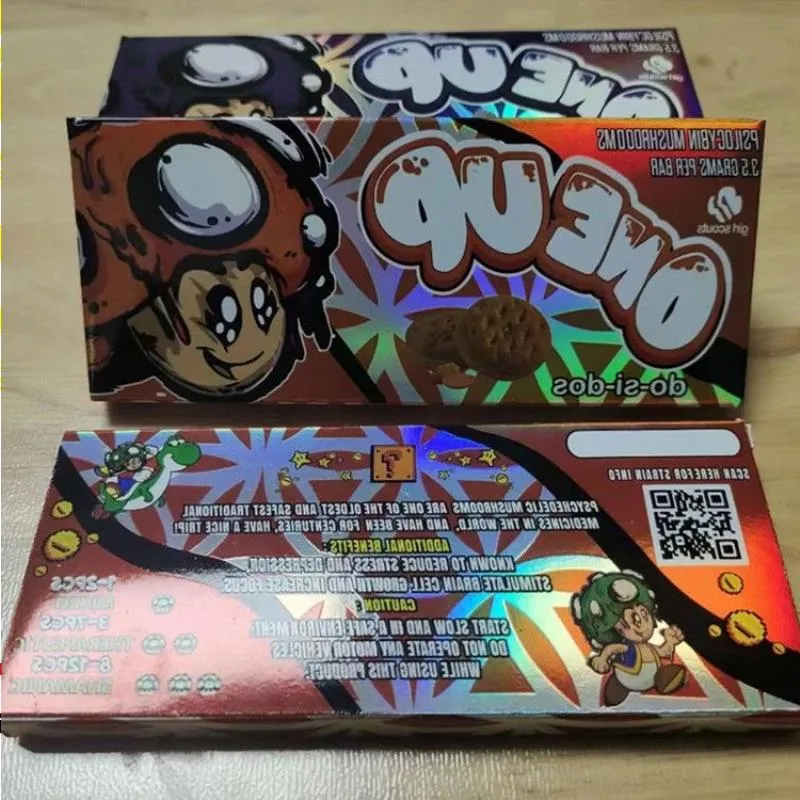
One Up Bars have become one of the most recognizable names in the gray-market psychedelic edibles space — sold in smoke shops, online, and through informal networks, and recognizable by their distinctive retro video game branding. This guide explains what they are, what they contain, what the science says about psilocybin, why the edible format creates specific risks, and what anyone considering or currently using these products needs to know.
This is not a product review or buyer’s guide. It is a public health explainer — the kind of honest, accurate, science-based information that allows adults to make genuinely informed decisions and that helps parents, educators, and healthcare providers understand what these products actually are.
1. What a One Up Bar Actually Is
A One Up Bar is a commercially produced chocolate bar marketed in the gray-market psychedelic edibles space, designed to contain psilocybin — the psychoactive compound found in certain species of mushrooms commonly called “magic mushrooms.” The bars are typically sold in 3.5-gram equivalents (a standard unit in the underground mushroom market), divided into segments designed to represent individual doses.
They are part of a broader and rapidly growing category of psilocybin-containing or psilocybin-adjacent edible products — a market that emerged from the convergence of cultural enthusiasm for psychedelic research, the normalization of cannabis edibles, and entrepreneurial opportunism in the regulatory gray areas created by decriminalization movements in several U.S. cities and states.
The One Up name and brand has spread to the point where multiple manufacturers produce products under similar or identical branding — meaning there is no single company or consistent product behind the name. Two One Up Bars purchased in different cities, or even from different sources in the same city, may contain entirely different compounds, entirely different doses, or in some cases no psilocybin at all. This inconsistency is one of the defining features of the gray-market edibles landscape and one of its primary dangers.
Important Context One Up Bars are not a single regulated product from a single manufacturer. The name is used across multiple gray-market producers with no quality control, no standardized dosing, and no consistent formulation. What you are buying varies dramatically depending on source, and there is no reliable way to verify contents without laboratory testing.
2. The Name and the Branding
The “One Up” name is a direct reference to the iconic mushroom power-up in the Super Mario Bros. video game franchise — the small spotted mushroom that, when collected, grants Mario an extra life. The reference is deliberate and effective: it is instantly recognizable across generations, carries associations of leveling up and gaining extra capacity, and wraps a psychedelic product in the nostalgic language of childhood gaming culture.
The branding strategy reflects a sophisticated understanding of target demographics. The colorful packaging, the game reference, the playful name — all of these make the product feel approachable, fun, and culturally connected. They reduce the psychological distance between a curious consumer and a decision to try the product. They make something that is, pharmacologically, a serious psychedelic compound feel like a novelty snack.
This gap between what the branding communicates and what the product actually contains is not accidental. It is the same strategy deployed across the broader psychedelic edibles market — the same reason products are called “Wonderland” or “Cosmic” or “Euphoria Blend.” The name tells you what the manufacturer wants you to feel. It does not tell you what the product contains, how much psilocybin is actually present, or what the experience will actually be like.
The distinctive Super Mario mushroom imagery also creates a serious child safety concern. These products are visually indistinguishable from premium novelty chocolate to a child — or to any adult who doesn’t know what to look for. Accidental ingestion of psilocybin-containing products by children has been documented in multiple U.S. states, and the playful, candy-adjacent packaging of One Up Bars contributes directly to this risk.
3. What’s Inside: Active Compounds
One Up Bars marketed as psilocybin products contain some combination of the following components. Understanding each is essential for accurate risk assessment.
Psilocybin and Psilocin
The intended active ingredient in psilocybin One Up Bars is psilocybin — a naturally occurring compound found in approximately 200 species of fungi, most commonly in the genus Psilocybe. Psilocybin is a prodrug: it is pharmacologically inactive until metabolized in the body, where it is rapidly converted by alkaline phosphatase enzymes into psilocin — the compound that actually produces psychoactive effects by acting as a partial agonist at serotonin 5-HT2A receptors in the brain.
Psilocin’s action at 5-HT2A receptors — concentrated in the prefrontal cortex, the region governing executive function, self-referential thinking, and emotional processing — produces the characteristic effects of psilocybin: perceptual changes, emotional amplification, alterations in time perception, and at higher doses, the dissolution of the ordinary sense of self.
The Chocolate Matrix
The chocolate serves as a delivery matrix — masking the earthy, often unpleasant taste of dried psilocybin mushrooms while providing a culturally familiar, accessible food format. Dark chocolate is most commonly used. The fat content of chocolate may also modestly affect the absorption of some lipid-soluble compounds, though psilocybin itself is water-soluble and not significantly affected by this.
What Else May Be Present
Gray-market psilocybin products may contain additional compounds not disclosed on packaging. Some One Up Bars contain functional mushroom extracts (lion’s mane, reishi) alongside psilocybin — an increasingly common formulation in the psychedelic wellness space. Others contain Amanita muscaria extract (muscimol) rather than psilocybin — a completely different psychoactive compound with different effects and a different risk profile. And some contain no psychoactive compound whatsoever, substituting with novel psychoactive substances or simply providing non-psychoactive mushroom powder with a psilocybin-coded marketing aesthetic.
Contamination RiskGray-market psilocybin edibles have been found to contain undisclosed adulterants including synthetic cannabinoids, novel psychoactive substances, and other compounds. There is no reliable way to determine the true contents of an unlabeled gray-market product without laboratory testing. What is sold as a “psilocybin chocolate bar” may contain a very different substance.
4. The Science: How Psilocybin Works
Psilocybin is one of the most extensively researched psychedelic compounds in history, and the science is genuinely fascinating. Understanding how it works in the brain explains both why it produces the experiences it does and why context, dose, and individual factors matter so profoundly.
The Default Mode Network
The most significant neurological effect of psilocin is the disruption of what neuroscientists call the Default Mode Network (DMN) — the brain network most active during self-referential thinking, mind-wandering, and the maintenance of what we experience as a coherent, continuous sense of self. The DMN integrates autobiographical memory, future planning, and self-concept into the continuous internal narrative we identify as “who we are.”
Psilocin disrupts the DMN’s normal hierarchical organization of brain networks. The result is a temporary dissolution of ordinary cognitive structures — the experience of ego softening or, at higher doses, ego dissolution — alongside a dramatic increase in the connectivity between brain regions that do not normally communicate directly. This increased cross-network communication is thought to underlie the creative, associative, and sometimes profoundly meaningful quality of psychedelic experiences.
Neuroplasticity Window
Research has found that psilocybin promotes neuroplasticity — the brain’s capacity to reorganize and form new connections. Studies at Johns Hopkins, Imperial College London, and NYU have found that this neuroplasticity window, combined with appropriate therapeutic context, may allow people to break out of entrenched patterns of thinking associated with depression, addiction, and obsessive disorders. This is the mechanistic basis for the therapeutic applications of psilocybin that have generated so much clinical excitement.
What the Research Has Found
Clinical research has demonstrated significant and durable benefits from psilocybin-assisted therapy for treatment-resistant depression, end-of-life anxiety, alcohol use disorder, and tobacco cessation. Effect sizes are among the largest seen in psychiatric research. The FDA has granted psilocybin Breakthrough Therapy designation for both treatment-resistant depression and major depressive disorder.
It is critical to understand, however, that these results are achieved through a specific protocol: precisely dosed pharmaceutical-grade psilocybin, administered to screened and prepared participants, in a designed therapeutic environment, with two trained therapists present, and multiple integration sessions afterward. The compound alone does not produce the outcomes — the compound in a carefully designed context does.
5. Dosage, Potency and the Mislabeling Problem
Dosage is the most important variable in any psilocybin experience, and the gray-market edibles market — including One Up Bars — has a severe and well-documented dosage accuracy problem.
| Dose Level | Psilocybin (mg) | Mushroom Equiv. | Expected Experience |
|---|---|---|---|
| Microdose | 0.5 – 2mg | ~0.1 – 0.3g | Sub-perceptual. Mild mood lift, focus. No hallucinations. |
| Low / Mini | 2 – 5mg | ~0.3 – 0.75g | Subtle perceptual shifts. Light euphoria. Manageable. |
| Moderate | 5 – 15mg | ~0.75 – 2g | Clear psychedelic effects. Visuals, emotional depth. Set and setting critical. |
| Strong | 15 – 25mg | ~2 – 3.5g | Intense. Ego softening. Requires preparation and safe environment. |
| Very Strong | 25mg+ | 3.5g+ | Potential ego dissolution. Only experienced users in controlled settings. |
The Mislabeling Reality
Independent laboratory testing of gray-market psilocybin chocolate products — including One Up Bars — has found psilocybin content ranging from near zero to more than three times the labeled amount within single products. A bar labeled as “3.5g equivalent” may contain anywhere from a sub-threshold dose to an overwhelming one. Within a single bar, psilocybin concentration varies due to uneven mixing — meaning one square may be dramatically more potent than the square next to it.
This is not a marginal quality issue. It is the primary mechanism behind accidental overdoses involving psilocybin edibles. People who eat what they believe to be a moderate portion may consume a dose that is several times what they intended, with no warning and no way to predict it from the appearance of the chocolate.
6. Effects Across Dose Levels
The effects of psilocybin are profoundly dose-dependent and significantly shaped by individual biology, prior experience, mindset, and environment. What follows is a description of typical effects at different dose levels — acknowledging that individual experience varies substantially.
Onset Phase (30–90 min)
Physical sensations typically precede psychological effects: yawning, mild nausea, body heaviness or lightness, a building awareness that something is changing. Anxiety during onset is common, particularly if dose uncertainty exists. Most onset discomfort resolves as the experience develops.
Come-Up (60–120 min)
Effects intensify from first perceptual changes to full expression. Color saturation increases. Surfaces may appear to breathe or ripple. Closed-eye visual content begins. Emotional content amplifies. Laughter, awe, and euphoria are common at moderate doses. Anxiety and confusion possible at any dose.
Peak (2–3.5 hrs)
Maximum intensity. At moderate doses: profound connectedness, emotional openness, perceptual richness. At higher doses: ego dissolution — the temporary dissolution of the ordinary sense of self as a bounded entity. This can be transcendent or terrifying depending on dose, preparation, and environment.
Come-Down & Afterglow (4–8 hrs)
Gradual return to baseline. Most users feel substantially normal by 5–6 hours, often with a warm, reflective quality — the “afterglow” — that persists for hours or days. This is considered by researchers a key window for integration of insights from the experience.
7. Health Risks and Who Is Most Vulnerable
Psilocybin has a well-established physiological safety profile — it is not organ-toxic, does not produce physical dependence in the clinical sense, and has no established lethal dose. However, “safe” and “without risk” are not the same thing. There are meaningful psychological and situational risks that every person considering these products needs to understand.
High-Risk Populations
Personal history of psychosis: Anyone with a personal history of schizophrenia, schizoaffective disorder, or psychotic episodes should not use psilocybin outside of carefully supervised medical contexts. This is one of the clearest contraindications in the psychedelic research literature.
Family history of psychosis: A first-degree family history of schizophrenia or bipolar disorder with psychotic features significantly elevates the risk of psilocybin-precipitated psychosis, even in individuals with no personal psychiatric history.
Active suicidality: Using a powerful emotional amplifier like psilocybin while experiencing active suicidal ideation is a genuine safety risk. While psilocybin shows promise for depression treatment in clinical settings, the difference between a therapeutic protocol and uncontrolled consumption is enormous.
Adolescents: The developing brain is more vulnerable to lasting disruption from psychedelic compounds. No amount of psilocybin use is considered safe for people under 25 by major mental health and public health organizations.
People taking psychiatric medications: SSRIs significantly blunt psilocybin’s effects, which can lead to dose escalation in search of effects. Lithium combined with psilocybin has been associated with seizures and is considered an absolute contraindication. MAOIs potentiate psilocybin significantly.
8. Why the Edible Format Creates Special Risks
Every form of psilocybin consumption has its own risk profile, but the edible format — and chocolate bars specifically — introduces several factors that make dosing errors both more likely and more consequential.
Delayed Onset: The Redosing Trap
When psilocybin is incorporated into chocolate, it must be digested and absorbed through the gastrointestinal tract before effects begin. This process is slower and more variable than consuming dried mushrooms directly. On an empty stomach, onset may begin in 30–45 minutes. After a meal, onset may be delayed to 90 minutes or more.
This delay is the single most common cause of accidental psilocybin overdose. A person who feels nothing after an hour assumes the dose was insufficient, takes a second portion, and then experiences both doses arriving simultaneously. The combined effect may be several times what they intended — and there is no way to reverse the decision once made.
The golden rule, always: Wait a minimum of 90 minutes — preferably 2 hours — before considering whether a dose was insufficient. This rule saves people from the most common and most preventable mistake in edible psilocybin use.
Palatability and Over-Consumption
Chocolate is enjoyable to eat. Dried psilocybin mushrooms are not — their taste and texture create a natural brake on consumption. With a One Up Bar, there is no such brake. Someone who is impatient, anxious, or simply hungry may eat significantly more than intended before any effects are felt, particularly if they underestimate potency from the outset.
Child Exposure Risk
One Up Bars in their standard packaging are visually indistinguishable from premium novelty chocolate to a child. Cases of children and teenagers inadvertently consuming psilocybin edibles — stored alongside regular food, accessed accidentally, or shared without knowledge — have been documented and are increasing as these products become more prevalent. The psychological impact of an unexpected, unprepared psilocybin experience on a child can be severe and lasting.
⚠ Emergency WarningIf a child or teenager has consumed what may be a psilocybin-containing product, call Poison Control immediately at 1-800-222-1222. Do not wait for symptoms. If the child shows signs of severe distress, confusion, or physical symptoms, call 911.
9. Mental Health Considerations
The mental health dimensions of psilocybin use are among the most important and least understood by most people who encounter One Up Bars through informal channels. The same compound that produces meaningful therapeutic outcomes in clinical settings can produce lasting psychological harm in the wrong context or for the wrong person.
Challenging Experiences
Difficult psilocybin experiences — sometimes called “bad trips” — are common, particularly at higher doses, in unfamiliar environments, or when the person brings unresolved anxiety or psychological material to the experience. These can involve intense fear, paranoia, existential dread, or profoundly distressing imagery. Research consistently shows that even challenging experiences can produce meaningful positive growth in retrospect — but this is not guaranteed, and the experience itself can be deeply frightening, particularly without preparation or support.
HPPD
Hallucinogen Persisting Perception Disorder (HPPD) — a condition in which perceptual disturbances including visual snow, trailing, and halos persist after a psychedelic experience — is a rare but real complication. Risk factors include high doses, polydrug use, and pre-existing anxiety disorders. It can be long-lasting and significantly distressing.
Psychological Integration
The period following a meaningful psilocybin experience — days to weeks afterward — is as important as the experience itself. Insights that emerge during the experience require time, reflection, and often professional support to integrate meaningfully into everyday life. The absence of any integration support structure — which is characteristic of gray-market product use — means that even positive experiences may not produce lasting benefit, and difficult experiences may remain unprocessed.
10. Drug Interactions
Psilocybin interacts with several commonly used medications in ways that range from reducing efficacy to creating serious danger. These interactions are essentially never communicated through gray-market product packaging.
| Substance | Interaction Type | Clinical Significance |
|---|---|---|
| SSRIs / SNRIs | Receptor blunting — significantly reduces psilocybin effects | May drive dose escalation; can still produce adverse effects at higher doses |
| Lithium | Potentiation — seizure risk | Contraindicated — associated with seizures in case reports |
| MAOIs | Potentiation — dramatically intensifies effects | Can produce unexpectedly intense, prolonged experiences |
| Cannabis | Potentiation — intensifies and increases unpredictability | Significantly increases anxiety and overwhelm risk, particularly at higher doses |
| Alcohol | Blunts some effects; increases nausea | Generally reduces quality of experience and increases adverse physical effects |
| Antipsychotics | Blocks psilocybin effects via receptor antagonism | May be used in emergency settings to reduce effects; should not be used to “plan” use |
11. Clinical Research vs. Street Products
One Up Bars benefit significantly from the cultural reputation of psilocybin clinical research — from the headlines about Johns Hopkins, the Michael Pollan book, the FDA breakthrough designations. This borrowed credibility is one of the most important things to examine honestly.
“The therapeutic outcomes we observe are not simply attributable to psilocybin. They emerge from psilocybin administered in a carefully designed context — with screened participants, preparation, trained support, and integration. Remove that context and you have removed most of what makes the intervention therapeutic.”Clinical Research Literature, 2022
Clinical psilocybin therapy involves: pharmaceutical-grade psilocybin with precisely known and verified potency; participants screened extensively for medical and psychiatric contraindications; multiple preparation sessions before any administration; two licensed therapists present throughout the entire experience; a specifically designed therapeutic room with carefully selected music; and multiple integration sessions in the weeks following. Every element is intentional and evidence-supported.
A One Up Bar provides: unknown potency from an unregulated source; no screening; no preparation; no support during the experience; whatever environment the person happens to be in; and no integration framework. The compound is similar. The context could not be more different. And context, in psilocybin research, is not incidental — it is determinative of outcome.
12. Legal Status
Psilocybin remains a Schedule I controlled substance under federal law in the United States — the most restrictive classification, indicating no accepted medical use and high abuse potential. This scheduling has not been revised despite the growing clinical evidence base, creating a significant tension between science and policy.
At the state and local level, the picture is evolving. Oregon and Colorado have created regulated therapeutic frameworks for psilocybin service centers. Several cities including Denver, Washington D.C., Detroit, and Seattle have decriminalized personal possession. These measures do not create a legal retail market for consumer products like One Up Bars — they affect enforcement of personal possession, not commercial manufacturing and distribution.
One Up Bars as commercial products remain illegal to manufacture, distribute, and sell under federal law and under most state laws. Decriminalization of personal possession does not protect sellers or manufacturers. In states where cannabis-style legalization has not occurred, possession of psilocybin products can result in serious criminal consequences.
| Jurisdiction | Personal Possession | Commercial Sale |
|---|---|---|
| Federal (U.S.) | Schedule I — Illegal | Illegal |
| Oregon | Decriminalized (small amounts) | Legal only through licensed service centers |
| Colorado | Decriminalized | Regulated framework in development |
| Denver, Seattle, D.C. | Lowest enforcement priority | Illegal |
| Most other U.S. states | Illegal | Illegal |
| Netherlands | Truffles legal | Truffles sold legally in smart shops |
| Jamaica, Mexico | Legal or tolerated | Retreat centers operate legally |
13. Harm Reduction Guidance
Harm reduction acknowledges that some people will use substances regardless of legal status or risk information. Providing accurate guidance to reduce the severity of potential harms serves public health better than information that is simply ignored. The following reflects harm reduction consensus from psychedelic research and practice communities.
Test Before You Use
Reagent testing kits from harm reduction organizations including DanceSafe can confirm whether a product contains psilocybin. This won’t tell you how much is present, but it can identify whether the product is what it claims to be — or whether it contains a different, potentially more dangerous compound. Fentanyl test strips can identify opioid contamination.
Start With a Very Small Amount
For any One Up Bar or similar product from a gray-market source, treat the label as unreliable. Begin with a small fraction — less than a quarter of a single square — and wait the full 90 minutes before evaluating effects. Do not combine with cannabis, alcohol, or any other substance, particularly for a first experience with a new product.
Set and Setting
Set (your mindset going in) and setting (your physical and social environment) are not soft suggestions — they are primary determinants of outcome in psychedelic research. A comfortable, familiar, private environment with a trusted sober person present dramatically reduces the likelihood of a difficult experience and improves outcomes if one occurs. Crowded public places, unfamiliar environments, or situations where you have social obligations are high-risk contexts for any psilocybin dose beyond the very lowest.
Have a Trip Sitter
A sober, trusted person present during the experience is the single most important safety measure for moderate or higher doses. Their role is not to direct the experience but to ensure safety and provide calm, grounded support if needed.
Integration Matters
What happens after the experience is as important as the experience itself. Journaling, discussing what emerged, and giving yourself time and space to process are not optional. If something disturbing or confusing arose, a therapist familiar with psychedelic experiences can provide support. Zendo Project and MAPS both offer integration resources.
14. Frequently Asked Questions
Are One Up Bars safe?
The honest answer is: it depends on the individual, the dose, the context, and — critically — what is actually in the product. Psilocybin itself has a relatively favorable physiological safety profile compared to many controlled substances. But gray-market One Up Bars carry meaningful risks beyond the pharmacology of psilocybin: inconsistent and often inaccurate dosing, potential contamination with other compounds, and the absence of any of the contextual safeguards that make clinical psilocybin research safe. For people with psychiatric histories, for adolescents, and for people taking certain medications, these products carry significant risk of serious harm.
How much of a One Up Bar should I take?
This guide does not provide dosing instructions for gray-market psilocybin products. What we will say is that regardless of what any label on a One Up Bar says, there is no reliable way to verify the dose you are consuming without laboratory testing. The single most important harm reduction principle for any gray-market psilocybin edible is to start with a much smaller amount than you think you need — and to wait a full 90 minutes before evaluating whether to consume more. The majority of adverse events involving psilocybin edibles involve people consuming more than they intended due to underestimating the dose or not waiting for the delayed onset.
What is the difference between a One Up Bar and functional mushroom chocolate?
Functional mushroom chocolate bars — made with lion’s mane, reishi, chaga, or cordyceps — contain no psychoactive compounds and will not produce any intoxicating or perceptual effects. One Up Bars are marketed as containing psilocybin and are intended to produce psychedelic effects. The two product categories share the “mushroom chocolate” aesthetic in the marketplace but are fundamentally different in composition, intended effect, legal status, and risk profile. Functional mushroom chocolates are legal dietary supplements. One Up Bars are controlled substances in most jurisdictions.
Can One Up Bars help with depression?
The clinical research on psilocybin for depression is genuinely promising — multiple peer-reviewed studies have found significant and durable benefits from psilocybin-assisted therapy for treatment-resistant depression. However, this research is conducted with pharmaceutical-grade psilocybin in precise doses, with screened participants, trained therapists present, and comprehensive preparation and integration support. Consuming a gray-market chocolate bar of unknown potency in an uncontrolled setting is not a replication of that therapeutic protocol. If you are experiencing depression and are interested in psilocybin therapy, pursuing it through legitimate clinical channels — where available — is dramatically safer and more likely to produce the beneficial outcomes the research describes.
What should I do if someone has a bad experience after eating a One Up Bar?
For anxiety and paranoia without severe physical symptoms: move to a calm, quiet space, maintain a reassuring presence, remind the person that the effects are temporary, encourage slow breathing, and stay with them. Do not leave them alone. For severe symptoms — chest pain, seizure, loss of consciousness, extreme self-harm risk, or psychosis that cannot be managed — call 911. You can also call Poison Control at 1-800-222-1222 for guidance. Most U.S. states have Good Samaritan laws that provide some protection from prosecution for people who call emergency services for drug-related emergencies.
How long do the effects of a One Up Bar last?
The total duration of a psilocybin edible experience typically ranges from 4 to 8 hours from the time of consumption, with the peak lasting 1–2 hours occurring approximately 2–3.5 hours after ingestion. The edible format generally produces a slower onset and potentially longer duration than directly consuming dried mushrooms. An afterglow effect — a warm, reflective residual feeling — often persists for several additional hours. Planning to be in a safe environment for the full 8-hour window is standard harm reduction guidance.
Do One Up Bars show up on drug tests?
Standard urine drug screens do not test for psilocybin or psilocin. Psilocybin is metabolized rapidly and its metabolites are not included in standard immunoassay panels. However, specialized forensic testing can detect psilocin metabolites in urine within approximately 24 hours and in hair follicle samples for up to 90 days. The absence of detection on standard drug tests is not a reliable safety indicator — psilocybin’s effects on health and cognition occur independently of whether it appears on a drug screen.